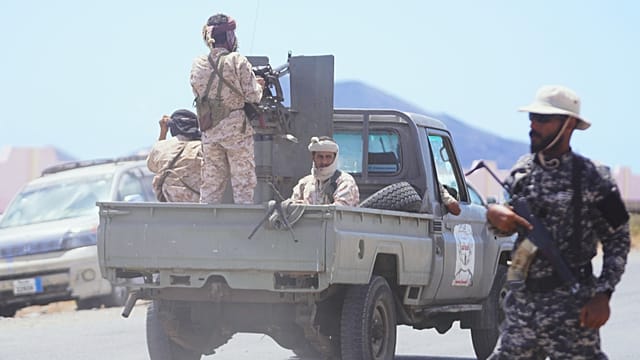
Oil gains as traders weigh Gulf tensions against strong Mideast exports
First reported 5 Oct, 01:44 UTCUpdated 2h ago11 sources
1 left · 6 center · 4 right · Full breakdown
Polyview Briefing
AI-generatedThe G7 agreed to release 100 million barrels of strategic oil reserves, leading to a decline in oil prices. Benchmark Brent slipped to around $101‑$102 per barrel and US WTI fell to about $90, while outlets note the move aims to ease supply concerns. However, commentators differ on whether the release will substantially lower prices given other market factors.
How the Left framed it
Left-leaning outlets stress that the G7 agreement to release reserves caused oil prices to slip, citing specific price drops for Brent and WTI and noting Irish fuel prices approaching April peaks.
How the Center framed it
Centre outlets report that prices fell after the announcement but remain above $100 per barrel, attributing the resilience to strong Middle East exports, Gulf tensions, the status of the Saudi East‑West pipeline and ongoing war risks.
How the Right framed it
Right-leaning outlets acknowledge the G7 release but warn that global oil stockpiles are scarily thin and the system is already straining, while also noting that Middle Eastern exports remain steady yet regional conflicts such as Houthi attacks keep disruption risks high.
What everyone reports
- G7 agreed to release strategic oil reserves
- Oil prices fell/slipped after the announcement
- Brent crude traded around $100‑$102 per barrel
- US oil prices fell
Where coverage differs
- left-leaning outlets emphasise that the G7 reserve release led to lower oil prices; centre outlets note that prices stayed above $100 because of Middle East exports, Gulf tensions and war risks; right-leaning outlets warn that global stockpiles are scarily th…
- centre outlets highlight the Saudi East‑West pipeline’s status (halted after a strike, then said to be flowing normally) as a factor influencing prices, while left and right outlets do not mention the pipeline
- right-leaning outlets stress that Middle Eastern exports are stable but regional conflicts raise disruption risks; left-leaning outlets point to rising Middle East crude exports as a factor in the price decline; centre outlets weigh strong Mideast exports aga…
Written by AI from the headlines and excerpts of 12 outlets (OpenRouter) on 6 Oct, 03:15 UTC. It can make mistakes — read the original reporting below. How briefings work
Compare the headlines
How outlets on each side framed it
Brent crude fell 66 cents, 0.65%, to $101.59 a barrel at 0740 PKT; US WTI at $90.12 a barrel, down 95 cents, 1.03%
Oil exports from the Middle East, excluding Iran, exceeded their pre-war average last week, Kpler data showed, as pipelines helped bypass the Strait of Hormuz despite continued attacks on shipping.
Prices fell Tuesday as traders assessed recovering crude exports against fresh shipping incidents around Hormuz and increased tensions around the Red Sea.
Full coverage
11 outlets — tap a headline to read it at the source
- Oil slips as Middle East crude exports rise, G7 to release stocks (opens The Express Tribune in a new tab)
Brent crude fell 66 cents, 0.65%, to $101.59 a barrel at 0740 PKT; US WTI at $90.12 a barrel, down 95 cents, 1.03%
- The Middle East Found A Way Around Iran’s Oil Chokehold (opens The Daily Wire in a new tab)
- Middle East oil exports return to pre-war levels, excluding Iran (opens Euronews in a new tab)
Oil exports from the Middle East, excluding Iran, exceeded their pre-war average last week, Kpler data showed, as pipelines helped bypass the Strait of Hormuz despite continued attacks on shipping.
- Saudi East-West oil pipeline is said to be flowing as normal (opens The Straits Times in a new tab)
The conduit was halted after a fresh strike on a pumping station along the route over the weekend.
- Oil price today: Why Brent stays above $100 despite G7 supply boost and rising Middle East war risks (opens Hindustan Times in a new tab)
Oil price today: Brent stays above $100 despite the G7 oil supply boost as Middle East war risks, shipping attacks and tight fuel supplies support prices.
- Oil prices slip as traders weigh strong Mideast exports against Gulf tensions (opens CNA in a new tab)
- Oil Fund Falls 2.3% on G7 Release as Petrobras Jumps (opens The Rio Times in a new tab)
Oil slid on Monday after the G7 said it would release strategic stocks, while Petrobras’s New York shares jumped 11.50% on Brazil’s election.
- Oil prices slip as G7 plans reserve release (opens Punch in a new tab)
Oil prices slipped on Monday after Middle East exports rose and G7 nations pledged to release 100 million barrels of crude and diesel from emergency reserv Read More: https://punchng.com/oil-prices-slip-as-g7-plans-reserve-release/
- Oil prices hover near $100 as Middle East supply holds up, Gulf risks persist (opens The Times of India in a new tab)
Oil prices are currently around $100 a barrel as stable Middle Eastern exports ease supply concerns. However, ongoing regional conflicts, including Houthi attacks, raise risks of disruptions. Officials indicate that rebuilding global oil stockpiles could take years due to significant withdrawals. Industry executives…
- Oil gains as traders weigh Gulf tensions against strong Mideast exports (opens Arab News in a new tab)
SINGAPORE: Oil prices made slight gains on Tuesday as security concerns in the Middle East kept a geopolitical risk premium in the market, even as resilient regional crude exports and a G7 emergency stockpile release eased supply concerns. Brent crude futures were up 27 cents, or 0.3 percent, at $100.59 a barrel at…
- Brent Futures Fall More than 2% as Middle East Exports Recover, Shipping Risks Persist (opens The Wall Street Journal in a new tab)
Prices fell Tuesday as traders assessed recovering crude exports against fresh shipping incidents around Hormuz and increased tensions around the Red Sea.