Egypt archaeology: Great Sphinx rocks reveal new species of ancient crocodile
First reported 6 Oct, 23:01 UTCUpdated 2h ago5 sources
1 left · 2 center · 2 right · Full breakdown
Polyview Briefing
AI-generatedScientists examining the limestone used to build the Great Sphinx discovered fossils of a new ancient crocodile species, including a skull missing its nose, linking the monument to prehistoric wildlife. The research involved international, Egyptian-European, and British teams, who identified the species and noted its connection to the Sphinx. The finding matters because it reveals an unexpected link between the monument and ancient crocodile fauna.
How the Left framed it
Left-leaning outlets highlight that the fossil was found in the same limestone used to build the Sphinx, stress the international research team, and describe the 50‑million‑year‑old discovery as jaw‑dropping.
How the Center framed it
Center outlets emphasize that the fossils were recovered a century ago from the 45‑million‑year‑old Mokattam Formation, that they represent a new crocodile species with a nose‑less skull resembling the Sphinx, and that this reveals an unexpected connection to the monument.
How the Right framed it
Right-leaning outlets focus on the idea that the Sphinx was built from rocks containing hidden crocodile fossils, call it a secret or unusual discovery, and note that British scientists identified the new species, named Herugavialis cairensis.
What everyone reports
- Fossils were found in the limestone used to build the Great Sphinx.
- The fossils represent a new species of ancient crocodile.
- The crocodile skull is missing its nose, similar to the Sphinx’s missing nose.
- The discovery was made by scientists (international, Egyptian-European, or British teams).
Where coverage differs
- Left-leaning outlets say the fossil is 50 million years old, while center outlets say it is 45 million years old (age of the Mokattam Formation).
- Left-leaning outlets frame the find as a jaw‑dropping discovery; right‑leaning outlets describe it as a secret or unusual secret of the Sphinx.
- Only right‑leaning outlets (GB News) provide the species name Herugavialis cairensis; left and center outlets do not mention this name.
Written by AI from the headlines and excerpts of 5 outlets (OpenRouter) on 7 Oct, 13:36 UTC. It can make mistakes — read the original reporting below. How briefings work
Compare the headlines
How outlets on each side framed it
Cris Bouroncle / AFP-Getty Images Scientists analyzing an ancient fossil embedded in the same limestone used to build the Sphinx of Giza have made a staggering discovery. The international research team examined the 50-million-year-old specimen, originally unearthed in Cairo’s Mokattam hills, using advanced CT…
A skull found nearly a century ago has helped Egyptian and European researchers revise part of the crocodile family tree, shedding light on the Mediterranean's prehistoric wildlife and revealing an unexpected connection to the Great Sphinx.
The Sphinx is one of ancient Egypt's most enigmatic monuments, and now scientists have found that it could be hiding a very unusual secret.
Full coverage
5 outlets — tap a headline to read it at the source
- Great Sphinx rocks reveal new species of crocodile (opens The National (UAE) in a new tab)
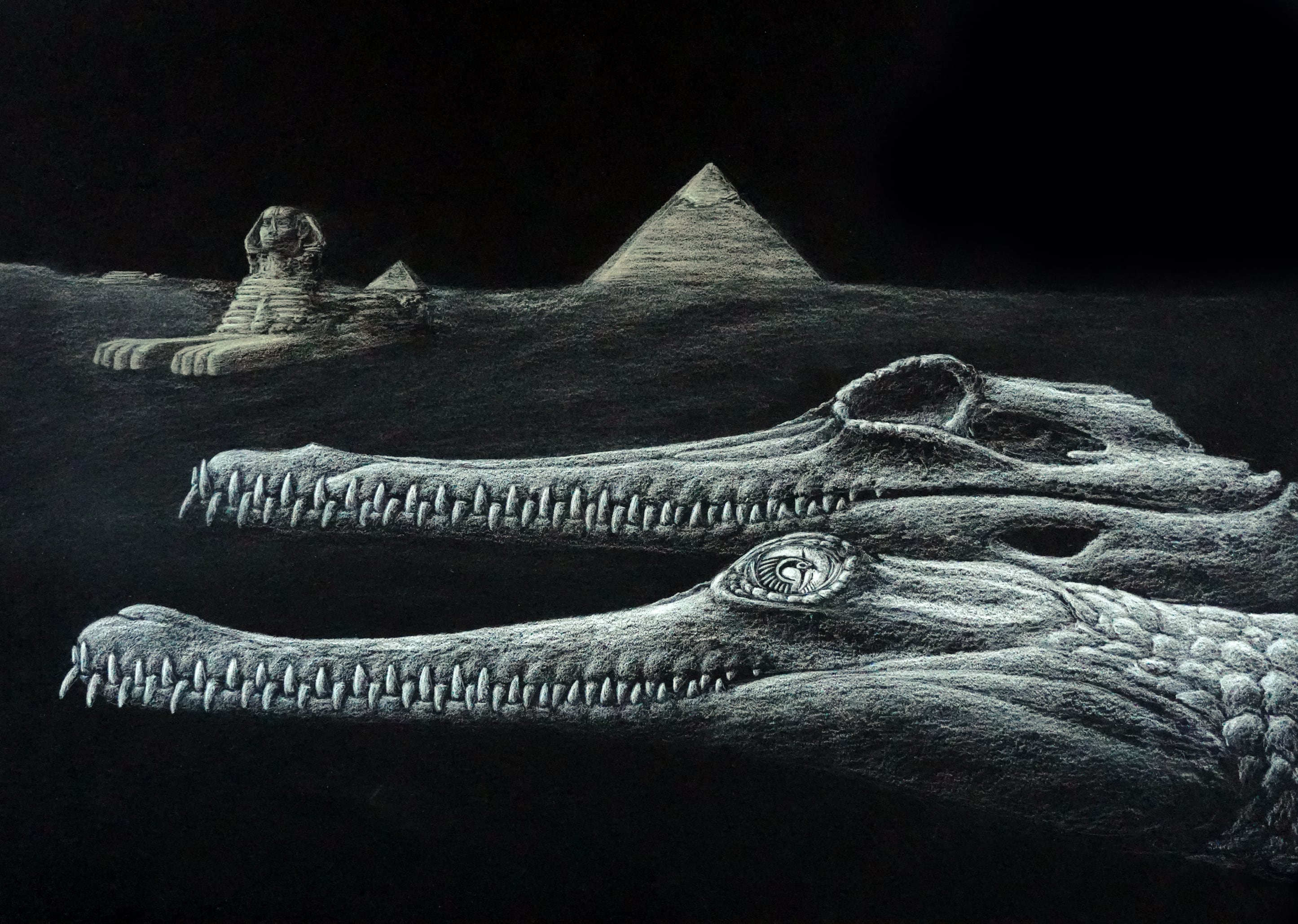
Fossils recovered a century ago in the rocks that make up the 45-million-year-old Mokattam Formation in Egypt have revealed a new species of crocodile. The rocks, used to build the Great Sphinx , contained the skull of a crocodile, missing only the tip of its snout. It has been named Herugavialis cairensis. “Given…
- The Sphinx's secret: Egyptian monument was built from rocks filled with the hidden fossils of ancient crocodiles, scientists discover (opens Daily Mail in a new tab)
The Sphinx is one of ancient Egypt's most enigmatic monuments, and now scientists have found that it could be hiding a very unusual secret.
- Scientists identify ancient Egyptian crocodile whose skull is missing its nose like the Sphinx (opens Euronews in a new tab)
A skull found nearly a century ago has helped Egyptian and European researchers revise part of the crocodile family tree, shedding light on the Mediterranean's prehistoric wildlife and revealing an unexpected connection to the Great Sphinx.
- Egypt's Great Sphinx of Giza 'built with crocodile fossils', British scientists reveal (opens GB News in a new tab)
Palaeontologists have identified a new species of extinct crocodile from fossil remains preserved in the very same limestone blocks that were quarried to construct the Great Sphinx of Giza. The creature, named Herugavialis cairensis, belongs to an ancient group of long-snouted crocodilians known as gavials. The…
- Scientists Make Jaw-Dropping Discovery in Rock Used to Build Sphinx (opens The Daily Beast in a new tab)
Cris Bouroncle / AFP-Getty Images Scientists analyzing an ancient fossil embedded in the same limestone used to build the Sphinx of Giza have made a staggering discovery. The international research team examined the 50-million-year-old specimen, originally unearthed in Cairo’s Mokattam hills, using advanced CT…